Beauty Floral Garden: A Designer’s Real-World Embroidery Review
As a designer who’s stitched hundreds of custom pieces—from baby onesies for boutique clients to limited-run tote bags for craft fairs—I opened Beauty Floral Garden expecting charm. What I found wasn’t just pretty—it was purpose-built. This isn’t a generic floral icon tossed into a folder and called “versatile.” It’s a balanced, breathing composition: soft curves, intentional negative space, and botanical rhythm that reads clearly at 3 inches *and* holds up at 6. I tested it first on a linen tea towel (medium-weight, low stretch), then scaled it down for a cotton baby cap—and both times, the design felt like it belonged.
First Impressions: Mood, Shape, and Natural Fit
Beauty Floral Garden lands gently—not loud, not fussy. The layout flows diagonally, with a central bloom anchored by trailing vines and two supporting blossoms. No overcrowding. No filler. That matters immensely when translating to thread: every petal has room to breathe under satin stitch, and the vine stems avoid tight corners that snag or pucker. It reads as “hand-drawn elegance,” not clipart. That tone fits naturally in spaces where authenticity matters—nursery decor, wedding guest towels, artisan aprons, or personalized sweatshirts for small-batch apparel brands.
Where It Shines: Real Projects, Real Reactions
I used Beauty Floral Garden as the focal embroidery on a heavyweight organic cotton tote bag for a local herbalist’s shop. Customers paused mid-browse—not because it was flashy, but because it looked *considered*. The soft green-and-cream thread palette (I chose DMC 702 and 3865) echoed the brand’s earthy aesthetic without needing text. That’s the quiet power of this design: it communicates care, not clutter.
It also performed beautifully as an embroidered patch on twill fabric—clean edges, no fraying, and enough open space between elements to prevent fill-stitch bleed. For Etsy sellers listing handmade pillow covers or kitchen towels, Beauty Floral Garden adds instant warmth without demanding complex digitizing. As a machine embroidery design, its moderate stitch density means faster run times and less thread breakage on mid-range home machines—critical when fulfilling orders back-to-back.
For baby embroidery? Yes—but with nuance. On a 100% cotton onesie, I reduced the size to 2.75" wide and added lightweight tear-away stabilizer. The vines stayed fluid, the center bloom retained dimension, and there was zero stiffness against delicate skin. That’s rare in floral icons this detailed.
Where to Proceed Thoughtfully
This isn’t a one-size-fits-all embroidery file. Its graceful lines demand respect for context:
- Small hoop sizes (under 4”): Scale carefully—the trailing vine detail can compress awkwardly below 2.2". Test stitch density on scrap first; some areas may need slight manual thinning in your embroidery software.
- Textured or dark fabrics: The design relies on subtle layering. On heavy terry cloth or black fleece, consider simplifying outer vines or boosting contrast with metallic or matte thread.
- Stretchy knits (like jersey): Use cutaway + topping. The curved elements respond well to stabilization—but skip the satin-stitch-heavy version unless you’re using high-quality polyester thread and a sharp needle.
- Caps and curved surfaces: Avoid placing the full composition across the front crown. Instead, use just the central bloom + one vine stem as a side-temple accent. It reads cleaner and avoids distortion.
- Frequent-wash items (baby blankets, tea towels): Confirm your stitch type. Running stitch outlines hold up better than dense satin over time—especially if you’re offering care instructions to customers.
What It Adds to Your Finished Product—Beyond Looks
Beauty Floral Garden quietly elevates perceived value. When stitched on a linen napkin set, it signals “curated,” not “mass-produced.” For craft business owners, that translates to higher price confidence and fewer requests for “make it simpler.” Buyers recognize intentionality—and they pay for it.
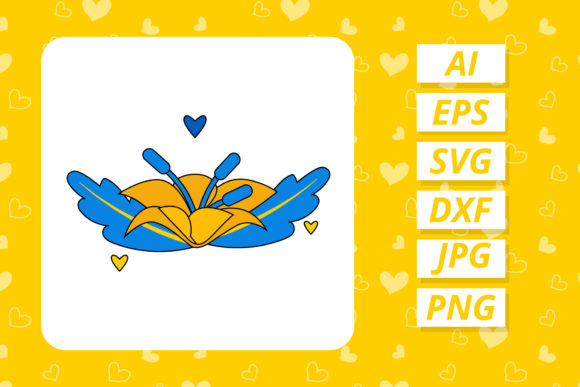
It also strengthens brand consistency. Because it’s offered as an AI, EPS, SVG, JPG, and PNG bundle, you can adapt it seamlessly: vector files for crisp print mockups, PNGs for Etsy listing thumbnails, SVG for Cricut-cut iron-ons paired with embroidery. That flexibility makes it a true design asset—not just a one-off embroidery file.
Practical Notes from the Hoop
Before stitching your first Beauty Floral Garden piece, do these five things:
- Test on scrap fabric matching your final project’s weight and stretch—even if it’s just a 1” square. Watch how the vine ends land and whether inner petals lift cleanly.
- Check thread color contrast in natural light *and* on-camera. Some pale greens or creams vanish on off-white linen unless you adjust brightness or add a fine outline stitch.
- Review stitch density in your embroidery software. If your machine flags dense fill areas, reduce density by 5–8% rather than shrinking the whole design.
- Confirm hoop size compatibility. At native 1920px × 1280px canvas, this scales cleanly to 4×4", 5×7", and 6×10" hoops—but always verify your software’s import behavior with EPS and SVG files.
- Verify licensing for commercial use. Since it’s categorized under Icons and Graphics, confirm whether resale of finished embroidered products is permitted—or if digital redistribution (e.g., as part of a craft bundle) requires additional permission.
Finally—don’t skip the black-and-white mockup test. Flip your design grayscale. If shapes blur or hierarchy collapses, adjust spacing or line weight before stitching. Beauty Floral Garden holds up well, but every fabric and thread combo shifts perception.
This isn’t just another floral icon. It’s a thoughtful, adaptable, quietly confident design—one that works as hard as you do. Whether you’re stitching for joy, gifting with meaning, or building a craft business, Beauty Floral Garden earns its place in your active design library. Just remember: even the most beautiful garden needs the right soil, sun, and season. Give it yours.